
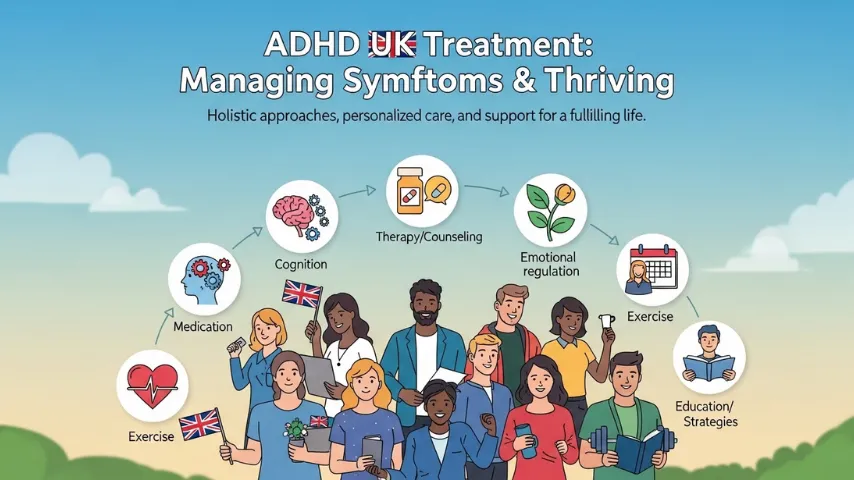
What are the ADHD UK Treatment Options?
If you are looking for ADHD treatment in the UK, you will find that the UK uses a “multimodal” approach. This simply means combining different types of support to get the best results. Rather than relying on just one method, a good plan looks at your brain chemistry, your daily habits, and your environment.
The main options for your care include:
| Care Type | What it Does | Examples |
| Medication | Balances brain chemicals to help you focus. | Stimulant and non-stimulant tablets. |
| Therapy | Teaches you practical life skills and coping habits. | Cognitive Behavioural Therapy (CBT). |
| Coaching & Education | Helps you organise your life and understand your brain. | ADHD Coaching and Psychoeducation. |
| Lifestyle Changes | Supports your physical health to reduce symptoms. | Exercise, better sleep, and diet changes. |
You may also be interested in: ADHD Syndrome Adults: What You Need to Know
The Case for Combined Treatment — Medication Plus Therapy:
Using medication and therapy together is widely considered the gold standard for ADHD UK treatment.
- Medication acts like a pair of glasses for your brain; it corrects the focus and balances your brain chemistry.
- Therapy, specifically ADHD therapy in the UK, teaches you how to read. It helps you build habits, organise your time, and manage your emotions.
Without medication, trying to learn new habits can feel exhausting because your brain is struggling to focus. Without therapy, you might have the focus, but you won’t know how to organise your day. Together, they build a solid foundation for long-term success.
Who Decides What ADHD Treatment You Receive in the UK?
In the UK, your treatment path is guided by strict national standards (known as the NICE guidelines).
NICE Guideline NG87 recommends medication as the first-line treatment for adults with moderate-to-severe ADHD.
- For adults with mild ADHD or those who prefer not to take medication, NICE recommends CBT as the primary intervention.
- For all patients, a combined multimodal approach — medication alongside psychological support — produces the best long-term outcomes.
To better understand how these professional roles interact within the healthcare system, let’s look at the specific responsibilities of your care team:
- The Specialist:
Your initial diagnosis and first prescriptions must come from a specialist, such as a psychiatrist or a qualified specialist prescriber. This ensures you get expert care in ADHD treatment in London.
- The GP’s Role:
Your General Practitioner (GP) cannot diagnose ADHD or choose your initial ADHD medication for adults in the UK.
- Shared Care:
Once the specialist finds the right medication and dose for you, they will ask your GP to take over. This is done through a legal agreement called a Shared Care Agreement (SCA). Your GP then writes your monthly repeat prescriptions, while your specialist checks on you once or twice a year.
You may also be interested in: ADHD Official Symptoms You Should Never Ignore
ADHD Medication — The First-Line Treatment in the UK:
For many adults, ADHD UK medication is the most effective first step to help manage moderate to severe symptoms. It targets the parts of the brain that handle attention and impulse control. There are two main types of ADHD medication in the UK.
Stimulant Medications: Methylphenidate and Lisdexamfetamine:
Stimulants are the most common first-choice medicine for ADHD in the UK. They increase the levels of two key chemicals in your brain: dopamine and norepinephrine. These chemicals help brain cells talk to each other more effectively.
The two main stimulants used are the following:
- Methylphenidate (e.g., Concerta or Ritalin).
- Lisdexamfetamine (e.g., Elvanse).
Doctors usually prefer once-a-day, slow-release tablets because they keep your focus steady all day, are easier to remember, and have a lower risk of being misused.
Non-Stimulant Medications: Atomoxetine and Guanfacine:
If stimulants cause side effects, do not work, or are not suitable for you, your doctor may suggest a non-stimulant ADHD medication in the UK.
- Atomoxetine (Strattera) is a slow-acting daily pill that increases norepinephrine in the brain.
- Guanfacine (Intuniv) is another option that helps calm the nervous system and improve focus.
Non-stimulants do not have a risk of misuse and can be a great alternative for those with specific health needs.
How Specialists Decide Which Medication to Try First?
Before prescribing any UK ADHD meds, your specialist will check the following:
- Your physical health (including your blood pressure and heart rate).
- Your family medical history, especially any heart problems.
- Your daily routine and job schedule to match the right pill to your lifestyle.
What Happens If Medication Does Not Work or Is Not Tolerated?
If your first medication does not work or makes you feel unwell, do not worry. Your specialist can easily switch you to a different stimulant, adjust the dose, or transition you to a non-stimulant option.
You may also be interested in: Symptoms of ADHD As an Adult: Spotting the Signs
The Titration Process: How ADHD Medication Is Started and Adjusted:
Finding the right dose of drugs for ADHD in the UK is a careful, step-by-step process called ‘titration’.
What Happens During a Titration Period?
- You start on a very low dose of your medication.
- Every week or two, your prescriber will slowly increase the dose.
- You will track your symptoms, blood pressure, heart rate, and weight.
- Once you find the dose that gives you the best focus with the fewest side effects, your dose is “optimised” (stabilised).
How Long Does Titration Take in the UK?
For most adults, the titration process takes between 12 and 16 weeks. If you have other health concerns, like anxiety or high blood pressure, your doctor will go much more slowly to keep you safe.
Managing Side Effects During Titration:
If you experience mild side effects as your body adjusts, here are some simple ways to handle them:
- Trouble sleeping: Take your slow-release tablet early in the morning, ideally before 9:00 am.
- Low appetite: Eat a hearty, protein-rich meal before you take your pill in the morning.
- Dry mouth or mild headaches: Stay well-hydrated by drinking water throughout the day.
You may also be interested in: What Is the Best Way to Get Diagnosed with ADHD?
ADHD CBT — Cognitive Behavioural Therapy as a Treatment:
Cognitive Behavioural Therapy (CBT) is an excellent, practical form of ADHD support in the UK.
What ADHD-Specific CBT Involves:
Unlike standard therapy, ADHD-focused CBT teaches you real-world habits:
- Time management: Learning how to plan your day, use calendars, and stop procrastinating.
- Mindset shifts: Overcoming the shame and anxiety of past mistakes.
- Emotional control: Finding healthy ways to calm down when feeling overwhelmed.
Does CBT Work for ADHD?
Yes! CBT is highly effective. NICE guidelines recommend it for adults who prefer not to take medication, those who cannot take it, or those who still struggle with daily tasks even with medication.
You may also be interested in: ADHD Cure in Adults: Is There a Real Cure?
Psychoeducation and ADHD Coaching as Treatment Options:
While clinical therapies are essential, understanding the condition is equally vital. The following educational approaches provide practical tools for managing life with ADHD:
What Psychoeducation for ADHD Involves?
Psychoeducation is simply learning how the ADHD brain works. Understanding that your challenges are biological—not a character flaw—helps remove guilt and builds self-confidence.
How ADHD Coaching Differs From Therapy?
- Therapy (CBT) is run by licensed psychologists to help heal emotional struggles, anxiety, or trauma.
- ADHD Coaching is action-focused. A coach helps you with hands-on tasks, like organising your desk, studying for exams, or managing your work projects.
Finding an ADHD Coach in the UK:
While the NHS does not usually fund coaching, you can look for certified, private coaches through trusted directories like the Life Coach Directory or ADHD Coaches UK.
You may also be interested in: Snooze Control: Effective ADHD Sleep Problems Treatment
Non-Medication and Lifestyle Treatments for ADHD:
There are several natural strategies you can use alongside your medical care to help manage your symptoms:
- Exercise: Moving your body naturally boosts dopamine and norepinephrine, acting like a mild, natural brain-booster.
- Sleep Hygiene: Keeping a regular bedtime, avoiding screens before sleep, and cutting out caffeine in the evening can dramatically improve your focus the next day.
- Diet and Nutrition: Eating protein, complex carbs, and healthy fats helps keep your energy steady.
If you are curious about non-prescription ADHD medication in the UK or supplements, here are some key minerals that support brain health:
| Supplement | What it Does | Best Food Sources |
| Omega-3 (Fish Oil) | Supports brain cells and reduces brain fog. | Salmon, mackerel, and sardines. |
| Zinc & Iron | Essential for making dopamine in the brain. | Red meat, oysters, and pumpkin seeds. |
| Magnesium | Calms the nervous system and improves sleep. | Spinach, almonds, and dark chocolate. |
| Vitamin D | Protects overall brain function. | Eggs, direct sunlight. |
Always consult a doctor before starting any new supplements.
Environmental and Organisational Strategies:
Small changes to your workspace can make a massive difference:
- Use noise-cancelling headphones to block out distractions.
- Break your work into 20-minute chunks with quick physical breaks.
- Write down instructions instead of trying to remember them.
You may also be interested in: What is ADHD Inattentive and Distractible Type?
ADHD UK Treatment for Women — What Is Different?
Women with ADHD are often diagnosed late in life. Because they tend to show quiet, “inattentive” symptoms (like daydreaming or being disorganised) rather than hyperactive ones, they are often missed in school.
Why Women May Respond Differently to Stimulant Medication?
The female hormone oestrogen directly helps the brain produce dopamine. When oestrogen levels are high, ADHD symptoms are usually easier to manage, and medications work beautifully.
Hormonal Fluctuations and ADHD Treatment Efficacy:
A woman’s cycle can act as a monthly rollercoaster for her ADHD:
- The Week Before Your Period: Oestrogen levels drop sharply, which means dopamine levels drop too. Many women find their medication “stops working” during this time. Under close specialist guidance, some women use “cycle dosing” (adjusting their dose during this week) to manage this.
- Menopause: The permanent drop in oestrogen can make ADHD symptoms feel much worse, causing severe brain fog.
Late-Diagnosed Women and Adjusting to Treatment:
Being diagnosed as an adult woman can bring a mix of relief and sadness. Therapy and support groups can help you unlearn years of masking and navigate life with self-compassion.
You may also be interested in: Finding the Right Adult Medicine for ADHD
ADHD Treatment for Co-occurring Conditions:
Treating ADHD and Anxiety Together:
If your anxiety is caused by your ADHD (e.g., worrying about being late or forgetting things), treating your ADHD with medication will often calm your anxiety naturally.
Treating ADHD and Depression:
If you have both conditions, your specialist will decide which one is causing you the most struggle and treat that first, sometimes combining antidepressants with ADHD support.
ADHD and Autism:
Having both ADHD and autism (often called ‘AuDHD’) is very common. It can feel like a constant battle between wanting routine (autism) and craving novelty (ADHD). Treatment is the same, but titration is usually done very slowly to avoid sensory overwhelm.
You may also be interested in: Government ADHD Test in London: A Complete Guide
How to Access ADHD Treatment Quickly in the UK?
If you are living in London or the UK, there are several pathways to care. Understanding these options, especially those that allow for faster access, is crucial for managing your health effectively:
Standard NHS Pathway:
You start by speaking to your GP for a referral. While this is completely free, waiting lists in London are currently very long, regularly taking two to five years.
NHS Right to Choose:
If you live in England, you have a legal “Right to Choose”. This allows you to request a referral to an NHS-approved independent provider, with the cost fully funded by the NHS, helping you bypass long local waiting lists.
Bupa Insurance Pathway:
If you are a Bupa member, you may be able to access assessments and support through the Bupa mental health pathway. In many cases, Bupa’s “Direct Access” service allows members to contact them directly for a clinical triage, potentially bypassing the initial GP referral for mental health support.
Once your eligibility is confirmed, they can direct you to recognised private clinics, such as BritMed Healthcare, for a comprehensive assessment. It is recommended to contact Bupa directly to verify your specific policy coverage and any applicable excesses.
How Can Britmed Healthcare Help You?
If you cannot afford to wait years and want to access top-tier care immediately, BritMed Healthcare is here to help.
By choosing BritMed, you can book a fast, private ADHD assessment and begin your ADHD UK treatment journey within weeks, not years. Their expert team provides a highly supportive, confidential environment with flexible appointments to suit your busy London lifestyle.
Professor Ahmed El-Missiry leads the clinical team at BritMed. With 30 years of professional experience, he is a
- Consultant Psychiatrist at the Nightingale Hospital, Marylebone.
- Fellow of the Royal College of Psychiatrists (FRCPsych) and the American Psychiatric Association (FAPA).
- Expert in ADHD, depression, anxiety, PTSD, and addiction management.
- Academic Leader and Professor of Psychiatry at the WHO Collaborative Centre for Training and Research.
Through BritMed Healthcare, you will receive an expert diagnosis, safe medication titration, and a seamless transition to a shared care agreement with your local NHS GP.
All information provided in this article is for educational and informational purposes only. It is not intended for self-diagnosis or treatment. If you are experiencing any symptoms or issues related to ADHD, please consult a qualified medical professional.