
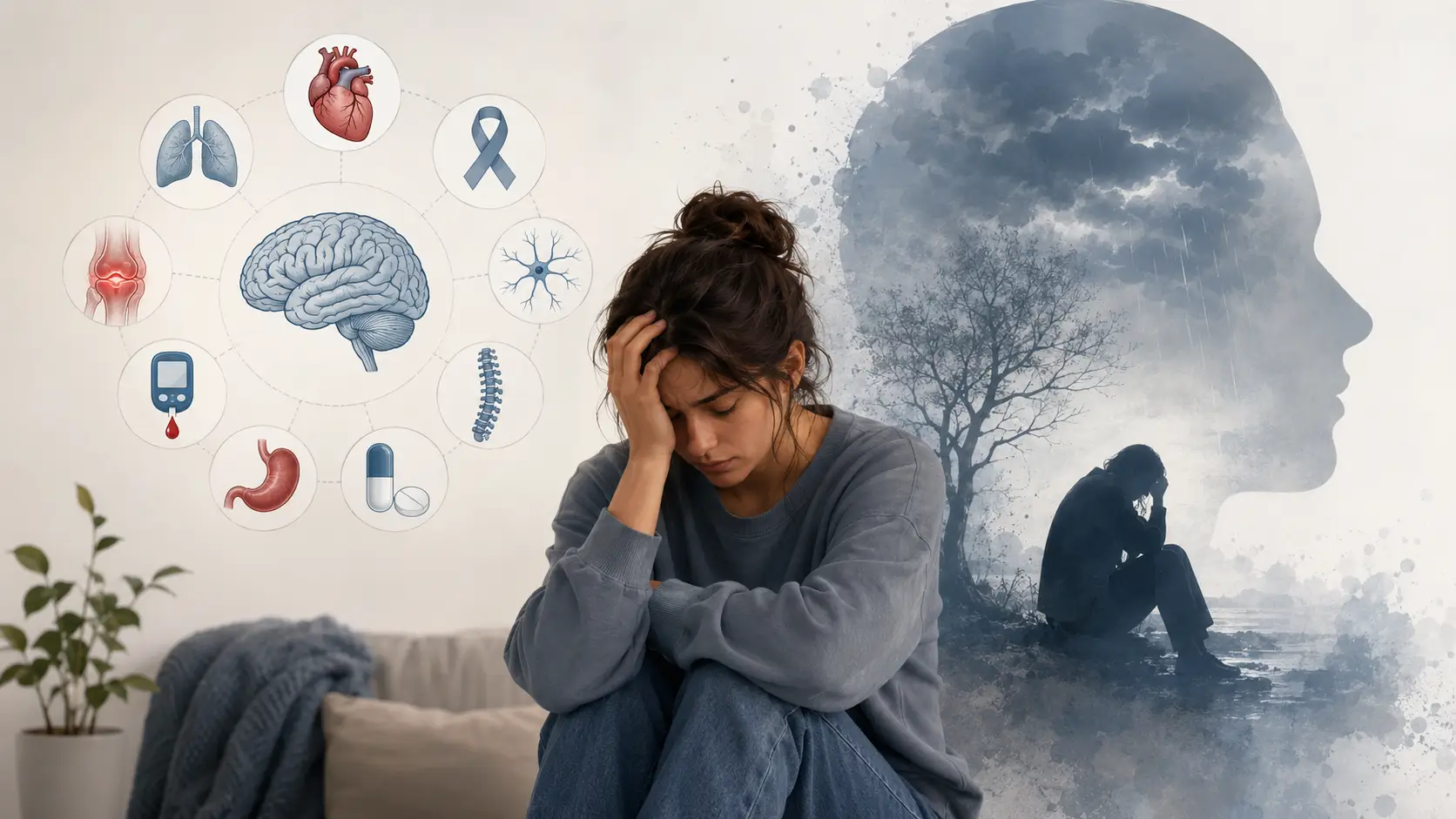
Can chronic disease lead to depression?
Yes, there are many diseases that can cause depression, and several factors contribute to this, including:
- Chronic pain: Pain associated with many chronic conditions, such as arthritis, can significantly increase the risk of developing depression.
- Personal and social changes: Chronic illness can lead to reduced mobility, social isolation, difficulty being self-reliant, or decreased income and ability to meet usual expenses. These factors can negatively impact a person’s mental health and may contribute to depression.
- Physical changes: Alzheimer’s and Parkinson’s diseases can cause depression due to their direct biological effects.
- Mental stress: The procedures used to treat chronic illnesses, such as medications and therapy visits, can put the patient under stress, negatively impacting their mental state and potentially leading to depression.
- Cardiovascular conditions: Diseases such as heart attacks and diabetes can significantly increase depression risk.
- Neurological disorders: Conditions like stroke and multiple sclerosis are strongly associated with depression.
You may also be interested in: Types of Diagnosed Depression: Breaking down the differences
Can depression lead to chronic disease?
Depression can indeed contribute to the development of several chronic illnesses. The link between depression and chronic disease is as follows:
- Cardiovascular problems: Depression has been linked to chronic cardiovascular conditions, increasing the risk of coronary artery disease and heart attacks.
- Physical problems: Depression can contribute to chronic pain, joint inflammation, and general weakness.
- Chronic metabolic problems: Depression can increase the risk of developing diabetes, particularly type 2.
- Behavioral problems: Depression contributes to weakening the body’s ability to perform personal tasks, and consequently, one’s self-care decreases, one becomes obese, does not follow a healthy diet, and does not care about physical activity. All these effects can increase the chances of suffering from many chronic diseases.
- Inflammation: Elevated CRP/IL-6 levels accelerate atherosclerosis and osteoporosis.
- Hormonal dysregulation: HPA axis changes contribute to metabolic syndrome.
- Neurological conditions: Increased stroke and Alzheimer’s disease risk.
You may also be interested in: 12 Most Common Reasons for Depression and How to Avoid Them
What are the signs and symptoms of depression?
The symptoms and signs of depression fall into main categories:
- Mood changes: These include persistent sadness, loss of interest, irritability, and a loss of interest in previously enjoyed activities.
- Physical changes: These include persistent fatigue and exhaustion, sleep disturbances (either excessive sleep or insomnia), unexplained aches and pains, slowed movements and speech, and changes in appetite (either overeating or loss of appetite).
- Cognitive changes: These include difficulty in focus, trouble remembering, easy distractibility, negative beliefs and pessimism, and recurrent suicidal thoughts.
- Behavioral changes: These include a tendency towards isolation and withdrawal from friends, family, and relatives, avoidance of responsibilities, and a predisposition to addiction.
- Psychomotor changes: Slowed movements or agitation.
- Unexplained pains: Headaches or stomach aches without cause.
Why depression and medical illnesses often occur together
The relationship between depression and other medical illnesses can be summarized as follows:
- Biological links: There are indeed similarities in the biological disturbances that occur in depression and other chronic conditions, particularly in the factors affecting inflammation and the immune system.
- Shared risk factors: Both conditions can lead to a lack of self-care, neglect of health, and disengagement from relationships, which are factors that contribute to many other illnesses.
- Psychological effects of illness: Chronic illness can cause constant stress and dissatisfaction, which, over time, can lead to depression.
- Medication effects: Many medications used in treatment can increase the likelihood of developing other health problems.
You may also be interested in: Drugs That Make You Depressed: A UK Guide
The crossover symptoms of depression and medical diseases
There are indeed a number of symptoms that can cross-reference depression and chronic illnesses due to their similarity in both conditions, including:
- Fatigue and weakness resulting from low energy levels.
- Appetite disturbances (either overeating or undereating) and the resulting changes in body weight.
- General pain can make it difficult to detect depression.
- Sleep disturbances, whether excessive sleep or insomnia.
- Cognitive and behavioral disturbances often manifest as difficulty in focus, distractibility, and memory problems.
- Psychomotor changes: Slowed movements or speech, common in depression and conditions like Parkinson’s or stroke.
- Low libido: Reduced sex drive overlaps with hormonal disruptions in illnesses like diabetes.
- GI issues: Constipation or digestive problems are seen in both.
You may also be interested in: The Best Types of Therapy for Anxiety and Depression
Diseases that can cause depression
There are indeed a number of diseases that can cause depression or increase the chances of suffering from it, and below we mention the most important ones.
High Blood Pressure
High blood pressure can be one of the diseases that can cause depression for the following reasons:
- Inflammation throughout the body.
- Reduced blood flow to the brain.
- Side effects of many high blood pressure medications.
- Persistent sadness and anxiety following a high blood pressure diagnosis.
- The need to reduce or eliminate certain favorite foods.
- Negative impact of behavioral changes in the depressed patient on blood pressure.
- Neglecting to take and adhere to blood pressure medication regimens in depressed patients.
Heart Disease
Heart disease could be considered one of the diseases that can cause depression for the following reasons:
- General inflammation.
- Autonomic nervous system disorders.
- Reduced blood flow to the brain.
- Excessive fear of the effects of heart disease.
- Sudden lifestyle changes.
- Depression contributes to an increased likelihood of developing heart problems.
Stroke
The relationship between stroke and depression involves the following:
- Brain damage caused by stroke in specific areas.
- An imbalance in neurotransmitters that regulate mood.
- Inflammation resulting from stroke and the release of certain chemicals.
- Behavioral and cognitive changes caused by stroke can negatively impact the patient’s mental health.
Chronic Pain
The relationship between chronic pain and depression involves the following:
- The shared pathway through which pain sensation, mood, and emotional state are transmitted.
- Brain changes that occur with repeated and prolonged pain.
- The contribution of pain to the impairment of many usual or preferred activities.
- Overstimulation of the nervous system due to persistent pain.
- A constant fear of experiencing pain in any activity.
Cancer
Cancer could be one of the diseases that can cause depression for the following reasons:
- Inflammatory factors are released in many cancer cases.
- Side effects of cancer treatments.
- Hormonal imbalances can arise from many types of cancer.
- The emotional and psychological stress that often accompanies a cancer diagnosis.
- The physical effects of cancer.
Eating Disorders
The relationship between eating disorders and depression can be summarized as follows:
- An imbalance in neurotransmitters that regulate both appetite and mood.
- The negative effects of malnutrition, which deprive the body of essential nutrients for normal brain function.
- The impact of nutritional deficiencies on certain hormones, the disruption of which can affect mood and mental state.
- Loss of appetite can lead to social isolation and avoidance of gatherings and relationships, increasing the likelihood of developing depression.
Substance Use Disorder
The relationship between substance use disorder and depression can be summarized as follows:
- Addiction to certain substances significantly affects brain chemistry, making it more susceptible to disturbances that can lead to various psychological problems, including depression.
- Addiction can cause damage to the brain or nervous system.
- When someone becomes addicted to a substance and then stops using it, withdrawal symptoms appear, with a very noticeable negative impact on their mental state.
- In many cases, addiction can lead to a person’s desire to avoid relationships and social interactions, which increases their likelihood of experiencing depression.
Diabetes
Diabetes could be one of the diseases that can cause depression for the following reasons:
- The negative impact on brain tissue resulting from fluctuations in blood sugar levels, whether too high or too low.
- Insulin resistance, which has a significant impact on mental health.
- The ongoing inflammation in the body due to elevated blood sugar.
- The constant risk of developing life-threatening symptoms or complications.
You may also be interested in: Recovering from Clinical Depression: A Full Guide
Asthma
Asthma can be one of the diseases that can cause depression for the following reasons:
- Inflammatory substances are released in significant amounts into the bloodstream as a result of asthma, which is fundamentally an inflammatory disease.
- Severe oxygen deprivation to the brain due to the severe narrowing of the airways associated with asthma.
- The adverse side effects of some asthma medications, such as corticosteroids and their derivatives.
- Fear and anxiety stemming from the possibility of being unable to breathe normally.
- Sleep disturbances are associated with asthma-related breathing problems.
Multiple Sclerosis and Other Autoimmune Diseases
The relationship between Multiple Sclerosis and Other Autoimmune Diseases and Depression can be summarized as follows:
- Severe neurological inflammation resulting from the immune system attacking the cells of the nervous system.
- The occurrence of multiple sclerosis in specific areas of the brain.
- The negative effects of using high doses of steroids to treat MS.
- The negative impact of MS on a person’s ability to function in daily life.
Arthritis
The relationship between arthritis and depression can be summarized as follows:
- Persistent inflammation in the joints and the resulting chemical releases that circulate throughout the body.
- Persistent joint pain contributes to overstimulation of the nervous system through neurotransmitters that regulate both pain and mood.
- The negative effects of some arthritis medications, especially those prescribed for extended periods or at high doses.
- The inability to perform simple tasks leads to a loss of self-confidence and feelings of weakness.
COPD
COPD can be one of the diseases that can cause depression for the following reasons:
- Severe oxygen deficiency, particularly to the brain, due to lung tissue damage.
- A general inflammatory state throughout the body.
- High levels of carbon dioxide in the body.
- The adverse effects of some COPD medications, especially corticosteroids.
Osteoporosis
Osteoporosis can be one of the diseases that can cause depression for the following reasons:
- General inflammation throughout the body resulting from bone cell erosion.
- Consistently high levels of cortisol in the body.
- Neurotransmitters dysfunction.
- Hormonal imbalances.
- Psychological and emotional stress stemming from feelings of weakness and the constant fear of bone fractures.
Thyroid abnormality
The thyroid gland is one of the glands that controls every cell in the body, so any dysfunction can lead to systemic disorders. Its abnormalities can be considered one of the diseases that can cause depression for the following reasons:
- Hyperthyroidism, which can affect the nervous system and cause disturbances that impact mood and mental state.
- Hypothyroidism, which leads to impaired metabolism of body tissues in general, and the brain in particular.
- Negative effects on the brain resulting from the immune system attacking it in some autoimmune diseases.
- Changes in the skin, eyes, hair, and other parts of the body that significantly affect mental health.
Low Vitamin D
The relationship between vitamin D deficiency and depression can be summarized as follows:
- Vitamin D is essential for the production of many neurotransmitters that regulate happiness, sadness, and overall mood.
- Vitamin D contributes to combating brain inflammation.
- Mood receptors are adjacent to vitamin D receptors, so they influence each other.
- A persistent vitamin D deficiency can lead to long-lasting pain, which may contribute to social isolation, loneliness, and an increased risk of depression.
Iron deficiency anemia
Iron deficiency anemia can be considered one of the diseases that can cause depression for the following reasons:
- Iron is essential for the formation of neurotransmitters.
- Iron is a crucial element in the production of mitochondria and ATP, which are responsible for providing energy to cells and tissues, especially in the brain.
- One of the most important functions of iron is to transport oxygen to brain cells.
- Iron is involved in the formation of the myelin sheath, which is an essential component of nerve cells.
Low Vitamin B12
Vitamin B12 deficiency can be one of the diseases that can cause depression for the following reasons:
- It is essential for myelination, a process necessary for maintaining the health and function of nerve cells.
- Vitamin B12 deficiency increases the risk of inflammation in nerve cells.
- This vitamin is crucial for mitochondrial function, which is essential for energy production.
- The tingling and numbness sensations that may result from a vitamin B12 deficiency can cause anxiety and panic, which may develop into depression.
You may also be interested in: Best Drugs to Treat Depression: Safe & Effective Options
How can I find help?
If you experience any symptoms of depression that persist for more than a week or two without improvement, you should seek immediate medical attention and consider a professional Depression Assessment to better understand your condition and treatment needs.
At BritMed Healthcare, we have highly experienced psychiatrists and provide comprehensive support before, during, and after treatment.