
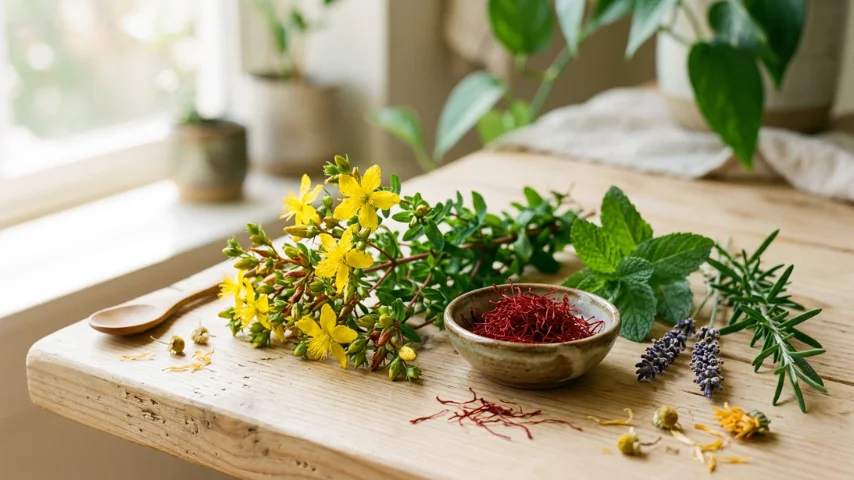
How Do Herbal Antidepressants Work?
Herbal remedies influence the brain’s chemistry in ways similar to conventional medications. They primarily target neurotransmitters—the chemical messengers responsible for mood regulation, such as serotonin, dopamine, and norepinephrine.
According to Healthline, some herbs inhibit the reuptake of serotonin, keeping more of it available in the brain, while others reduce cortisol levels to manage stress-induced depression.
Best Herbal Antidepressants Compared
St John’s Wort
- Perhaps the most well-known among natural antidepressants, St. John’s Wort is frequently studied for its efficacy in treating mild-to-moderate depression.
- It contains hypericin and hyperforin, which are thought to increase serotonin levels.
Saffron
- The saffron antidepressant effect has received considerable attention in clinical trials.
- Research suggests that saffron stigma is as effective as low-dose synthetic antidepressants for improving mood by enhancing serotonin metabolism.
Rhodiola Rosea
- Often used to combat burnout, rhodiola depression treatments focus on the herb’s adaptogenic properties.
- It helps the body adapt to stress and can improve symptoms of fatigue and low mood associated with emotional exhaustion.
Lavender
- While often associated with scent, oral lavender preparations are used in London to treat anxiety-related depression.
- It works by calming the central nervous system without the heavy sedation linked to some pharmaceuticals.
Ashwagandha
- As an adaptogen, ashwagandha reduces the physical and mental impact of chronic stress.
- By lowering cortisol, it indirectly supports mood stability and energy levels.
Lemon Balm
- Lemon balm is traditionally used to improve cognitive function and reduce agitation.
- It is particularly helpful for those whose low mood is accompanied by sleep disturbances.
Passionflower
- This herb is often paired with others to boost GABA levels in the brain, promoting a sense of calm and reducing the “racing thoughts” often tied to depressive episodes.
Valerian
- Primarily known as a sleep aid, Valerian helps manage depression by improving sleep quality.
- Since insomnia is a major trigger for mood dips, it serves as a vital supportive herb.
Quick Comparison of the Best Herbal Antidepressants
Herb | Primary Benefit | How it Works | Best For… |
St. John’s Wort | Mood Stabilisation | Elevates serotonin availability | Mild persistent sadness. |
| Saffron | Emotional Balance | Optimises neural metabolism | Natural mood lifting. |
Rhodiola Rosea | Mental Stamina | Enhances stress adaptation | Work-related burnout. |
Lavender | Nervous Soothing | Calms the central system | Anxiety-led low mood. |
| Ashwagandha | Stress Resilience | Lowers cortisol production | Chronic pressure and fatigue. |
Lemon Balm | Cognitive Clarity | Reduces restlessness | Agitation with sleep issues. |
| Passionflower | Inner Tranquillity | Boosts GABA concentrations | Racing thoughts and tension. |
Valerian | Restorative Rest | Improves slumber quality | Insomnia-triggered dips. |
Herbal Antidepressants vs SSRIs: What Research Says
While Selective Serotonin Reuptake Inhibitors (SSRIs) are the clinical gold standard, research indicates that the best herbal antidepressants can be comparable in specific mild cases. However, SSRIs have more robust data for severe clinical depression.
Feature | Herbal Antidepressants | SSRIs (Pharmaceutical) |
Onset of Action | 4–8 weeks | 2–6 weeks |
Side Effects | Generally mild (GI upset, photosensitivity) | Nausea, weight gain, and sexual dysfunction |
| Cost | Varies (available over-the-counter) | Prescription cost (unless exempt) |
| Prescription Needed | No | Yes |
Evidence Strength | Moderate (varies by herb) | Very High |
High-quality versions of these supplements are widely available in health shops across London, but always look for the THR (Traditional Herbal Registration) mark on the packaging to ensure safety and quality standards.
How to Choose the Right Herb for Your Symptoms
Selecting the right support is not a “one size fits all” process. In a fast-paced city like London, low mood often manifests alongside other symptoms like burnout, anxiety, or insomnia. To find the most effective natural antidepressants UK shops offer, you should match the herb to your primary struggle:
1. If You Feel “Burnt Out” and Fatigued
If your low mood is a result of long hours at the office or “London fatigue,” you likely need an adaptogen. These herbs help your body manage stress hormones.
- Top Choice: Rhodiola Rosea.
Research into rhodiola depression treatments shows it is particularly effective for those suffering from emotional exhaustion and physical tiredness. It helps “recharge” your mental battery without being a stimulant.
2. If You Feel Persistent Sadness (Mild-to-Moderate)
When the main symptom is a lack of interest in daily life or a constant low “cloud,” you may need herbs that specifically target serotonin levels.
- Top Choice: Saffron.
Using a saffron antidepressant approach is ideal for those who want a clinically backed alternative to low-dose pharmaceuticals. It focuses on mood elevation and emotional regulation.
- Alternative: St. John’s Wort.
Best for those not taking other medications, as it is the most researched herb for standard depressive symptoms.
3. If Your Low Mood is Driven by Anxiety and Tension
Many people in London experience “anxious depression,” where a low mood is accompanied by a racing heart or constant worry.
- Top Choice: Ashwagandha or Lavender.
Ashwagandha helps lower cortisol (the stress hormone), while oral lavender capsules are excellent for calming the nervous system without causing heavy sedation.
4. If You Can’t Sleep (Insomnia-Related Depression)
If your mood dips because you aren’t resting, your priority should be “sedative” herbs that improve sleep architecture.
- Top Choice: Valerian Root or Passionflower.
These are the best herbal antidepressants for those who find their thoughts racing at 2:00 AM. Improving your sleep quality is often the first step to improving your mental outlook.
Quick Selection Checklist
Before purchasing any natural antidepressants, UK residents should consider this “Three-Step Check”:
- Identify the “Lead” Symptom: Is it tiredness, sadness, or worry?
- Check Your Meds: If you are on the pill, blood thinners, or heart medication, skip St. John’s Wort and opt for Saffron or Ashwagandha instead.
- The 4-Week Rule: Most herbal remedies require 2 to 4 weeks of consistent use before you feel the full benefit.
When to Avoid Herbal Antidepressants
“Natural” does not always mean “safe.” You should exercise caution in the following scenarios:
- Drug Interactions: St. John’s Wort can dangerously interact with birth control, blood thinners, and conventional antidepressants.
- Pregnancy & Breastfeeding: Many herbs lack safety data for these periods.
- Surgery: Some herbs affect blood clotting and should be stopped weeks before any procedure.
- Severe liver/kidney disease: Herbs metabolized by the liver (e.g., St. John’s Wort) are risky; consult a doctor.
- Children & elderly: Limited safety data; not recommended under 18 or over 65 without supervision.
- Autoimmune conditions: Adaptogens like Ashwagandha may overstimulate the immune system.
BritMed Healthcare: Ensuring a Safe Path to Recovery
Distinguishing between a passing period of low mood and clinical depression is a nuanced process that requires professional expertise. BritMed Healthcare supports Londoners by offering comprehensive depression assessments and specialist consultations to provide much-needed clarity. Establishing an accurate diagnosis is the essential first step in ensuring your treatment plan—whether it involves the best herbal antidepressants or conventional medical interventions—is both safe and precisely aligned with your unique biological requirements.
While these are natural options, they can interact with other medications. If you are currently under the care of the NHS or taking prescribed antidepressants, please consult your GP before starting any herbal supplement.