
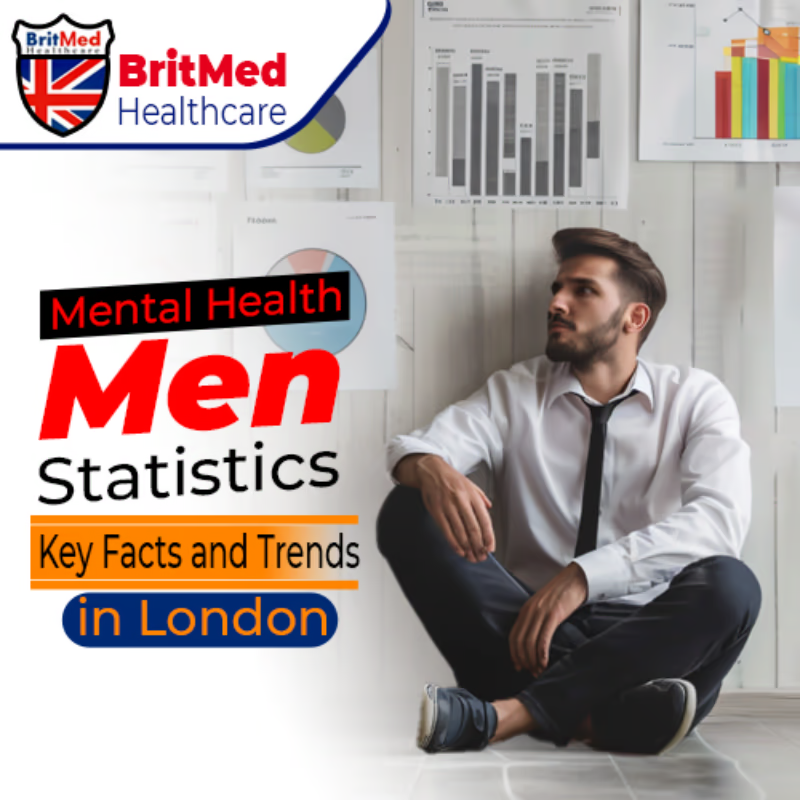
In this article, we refer to the most important Mental Health Men Statistics in London, as it is believed that women suffer more from mental health disorders, but the matter is not that superficial, as there are many factors that control all those numbers.
mental health men statistics overview
In general, men can suffer from mental health disorders just like women; according to the ADAA, up to 10% of men suffer from such disorders.
According to this statistic, one in ten men suffers from at least one type of mental health disorders, the most common of which are depression, anxiety, and others.
Despite the high prevalence of mental health disorders among men, many are unaware of it; psychological and social factors often prevent them from disclosing their suffering.
Unfortunately, more than 50% of these men do not seek appropriate treatment.
mental health men statistics in London
According to Mental Health Men Statistics in England, based on data from the London Assembly, approximately 12% of men suffer from mental health problems such as depression and anxiety.
However, most do not receive treatment. For example, men represent only 32% of those receiving treatment through NHS Talking Therapies.
mental health men statistics by disorder
In the following lines, we will look at the different mental health disorders and their prevalence among men in London.
Depression statistics among men in London
According to Mental Health Men Statistics cited by PRIORY, one in six adults experiences a major mental health disorder on a weekly basis.
For depression, the percentage of women affected (19%) is higher than that of men (14%) in Great Britain.
The disorder is also more prevalent among adults aged 16 to 29, affecting 28% in Great Britain.
Anxiety disorder statistics for men
According to the Mental Health Foundation, a 2021 survey found that the majority of people suffering from anxiety were between 16 and 29 years old, accounting for 28%.
This percentage decreases with age, reaching as low as 5% for those aged 70 and older.
Stress and burnout statistics in men
According to Mental Health UK, around 89% of men suffer from stress and burnout, which is not a small percentage, and it is most common among those aged between 35 and 44.
Suicide statistics among men
According to the Samaritans (2023), the number of men who die by suicide due to mental disorders is three times that of women who die for the same reason.
In London, the number of these men was 437 per 100,000, according to the London Assembly (2023).
Substance misuse and addiction statistics among men
According to the Office of National Statistics, men who die from addiction due to mental disorders are twice as many as women who die for the same reason.
In London, the number of these men was 21,252 per 100,000, according to the London Assembly (2023-2024)
Adult ADHD statistics in men
According to NHS England, approximately 13.9% of adults have been diagnosed with ADHD.
According to Mental Health Men Statistics in that website, Around 12.4% of men have this disorder.
PTSD statistics among men
According to Mental Health Men Statistics in PTSD UK, approximately 33% of people who experience trauma subsequently develop PTSD disorder.
According to the same study, 1 in every 10 people experience PTSD at some point in their lives.
Men’s mental health statistics compared to women’s
According to the Mental Health Foundation, the disparities between men and women in mental health issues are as follows:
- Mental Health Disorders: Approximately 24% of women experience at least one mental health disorder, compared to 15% of men.
- Suicide: The rate among men is approximately three times higher than among women.
- Life satisfaction: Lower in men than in women.
- Undergoing psychological treatment: Also lower in men, for many reasons.
- Sleep difficulties: More common in men, reaching up to 87%.
- Alcohol addiction: Approximately three times more common in men than women.
- Violent crimes: Men account for 1.5 times more often than women.
mental health men statistics and help-seeking behaviour
There is no single model for help-seeking behaviour, as the approach varies depending on several factors, including:
Personal characteristics
Men differ in their personalities, and these differences affect how they cope with mental health challenges and seek support. Some men are introverted and find it difficult to express their emotions, making them less likely to talk about their psychological problems or seek professional help. On the other hand, more open men may be more willing to share their concerns and seek help when needed.
The individual’s needs
Men’s mental health needs vary depending on age, family responsibilities, and their professional or social life. Some men require direct psychological support to deal with life pressures or difficult events, while others may rely on informal advice from friends or family. Understanding these needs helps direct men toward the most appropriate type of support.
Self-regulation skills
A man’s ability to manage his emotions and cope with daily stress significantly influences his decision to seek help. Men with strong self-regulation skills may try to resolve problems on their own before considering external support, whereas those who struggle with stress management may require early intervention to handle challenging situations in a healthy way.
The individual’s perception and understanding of the illness
Awareness of psychological symptoms and acknowledgment of having a problem plays a crucial role in help-seeking behaviour. Men who recognize signs of distress and accept that they need support are more likely to pursue treatment and professional guidance. Conversely, men who minimize or fail to understand their symptoms may delay seeking help, increasing the risk of worsening mental and physical health outcomes.
Mental health support options for men in London
According to the Men’s Health Forum (UK), there are many options available to men in London for support, including:
- Psychiatrists: These are doctors and consultants specializing in mental health disorders who can provide accurate diagnosis and determine the most appropriate treatment.
- Support groups: These groups allow men to contact with others experiencing the same or a similar problem.
- Hotlines: There are many such lines that can be used to receive assistance.
Why early mental health assessment matters for men
Early detection of mental health disorders in men is crucial, as a significant percentage of men suffer from such disorders without showing symptoms for various reasons.
These disorders can also cause other physical problems, including:
- Gastrointestinal problems.
- High-risk behaviors.
- Suicidal thoughts.
- Difficulty sleeping.
- Frequent anger.
- Alcohol addiction.
Book a confidential mental health consultation in London
Now you can Consult a Psychiatrist easily at BritMed, where we offer a wide range of specialized mental health services, including:
- Psychiatric Consultation (Initial Consultation, Follow-up Consultation, Children and Adolescents Screening Assessment).
- Addiction Disorder.
- ADHD Disorder.
- Anxiety Disorder.
- Bipolar Disorder.
- Depression Disorder.
- Dissociative Disorder.
- Eating Disorder.
- Insomnia Disorder.
- OCD Disorder.
- Personality Disorders.
- PTSD and Complex PTSD.
We offer the following advantages:
- Excellent expertise.
- A superior treatment experience.
- Repeat prescription service.
- Many advanced treatment options.
- Flexible appointments.
- We accept several medical insurance providers, including: Aviva, AXA Health, Preferred Health Care Ltd, Vitality Health, Bupa UK, WPA and Allianz Worldwide Care.
Check with your insurance provider if there are any excess payments required.
If pre-authorization is not arranged, you will need to pay upfront and claim back from your insurance.
FAQ
What is the biggest killer of men under 45?
According to the London Assembly, suicide is the leading cause of death among men under 50.
What is the biggest mental health issue for men?
Suicide can be considered the most serious problem related to mental disorders, as it is the leading cause of death among young people.
What is the mental health stigma for men?
Many men suffer from mental health disorders, but the stigma they feel prevents them from disclosing the problem and its symptoms; thus, it remains untreated and may cause other disorders to develop.
Is men’s mental health increasing?
According to some studies, the rate of suffering from mental disorders is indeed increasing among men aged 16 to 24 in Great Britain. This study proved that the rate was 14% during 1991, while it rose to 19% during 2018.
What stresses men the most?
According to PEDA, men feel stressed for more than one reason, the most important of which are the high cost of living and work pressures.
What are the 5 C’s of mental health?
The 5 C’s of mental health are Competence, Confidence, Connection, Character and Caring.